|
|

|
PROTOTYPING
Prototyping is the process of creating an early model of a mechanical part to evaluate its design, functionality, and manufacturability before mass production. It allows engineers to turn digital designs into physical components for hands-on testing and validation.
Common Prototyping Methods:
- 3D Printing / Additive Manufacturing - ideal for rapid, low-cost models with complex geometries.
- CNC Machining - produces accurate prototypes from the final material, useful for strength and durability tests.
- Casting and Molding - suited for parts that will eventually be manufactured in large quantities.
- Sheet Metal Forming and Fabrication - for components requiring precise bends, cuts, and joins.
Benefits of Prototyping:
- Identifies design flaws early, reducing costly revisions later.
- Validates part performance under real-world conditions.
- Improves fit, form, and function testing with assemblies.
- Provides a clearer basis for customer feedback and design approval.
- Shortens development cycles and increases confidence before series production.
|

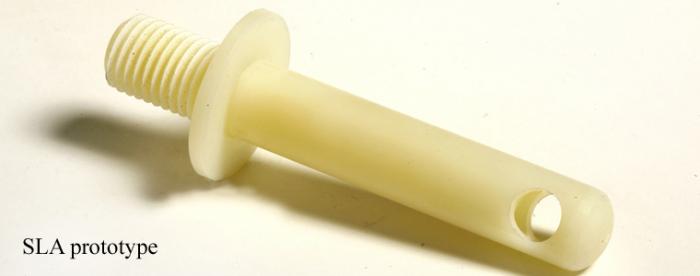
 From SLA prototype to production part
|
|
|